
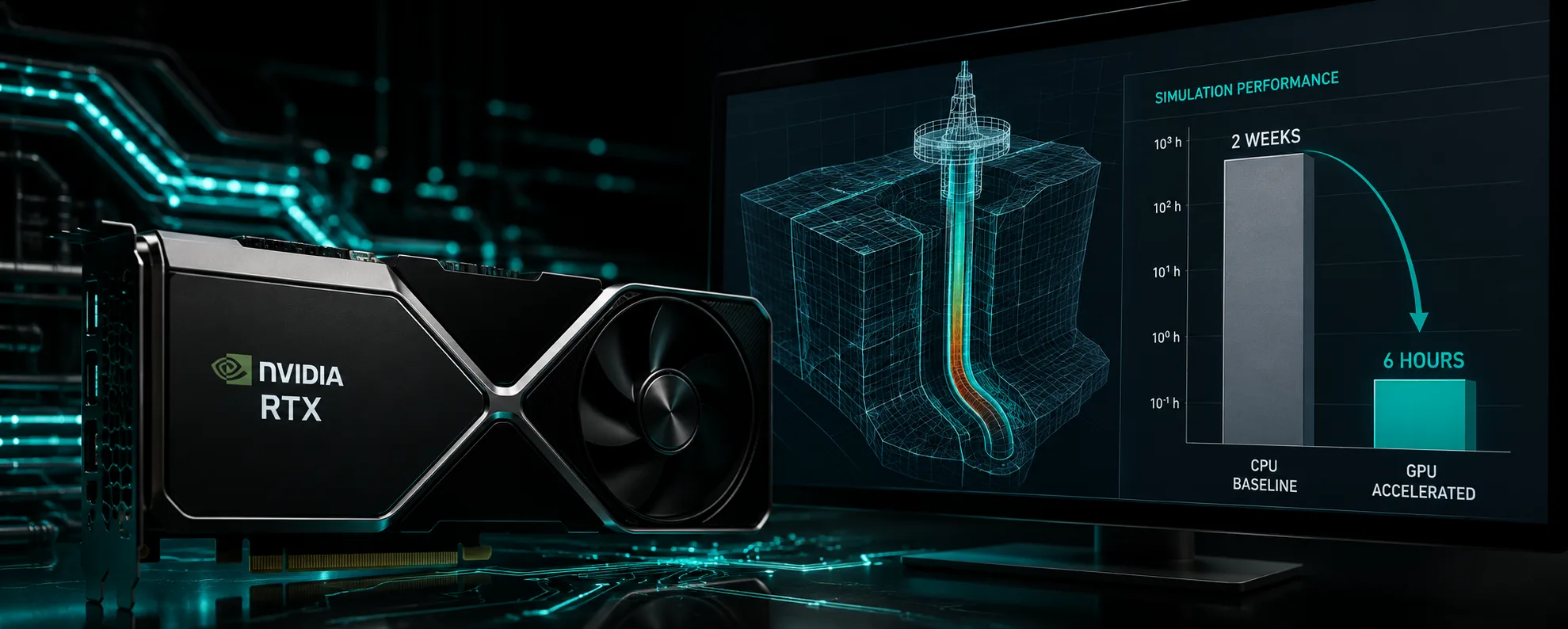
40× Faster Thermodynamic Simulations with CUDA GPU Acceleration
In collaboration with an industrial drilling partner and a leading university, we performed a full computational transformation of a CPU-based thermodynamic drilling simulation, migrating it to massively parallel GPU execution using NVIDIA CUDA. What once took two weeks now completes in six hours, enabling rapid iteration, real-time validation, and faster innovation cycles.
Category:
AI / MLIndustry:
Energy / HPCClient:
Industry & University PartnerYear:
2024The Challenge
Industrial thermodynamic drilling simulations demanded enormous computational resources. CPU-based architectures imposed hard limits on parallelism: large-scale models required up to two weeks per run, slow feedback loops hindered engineering innovation, and high energy costs made frequent experimentation impractical. The client needed a solution that preserved simulation accuracy while delivering an order-of-magnitude reduction in runtime.
Our Solution
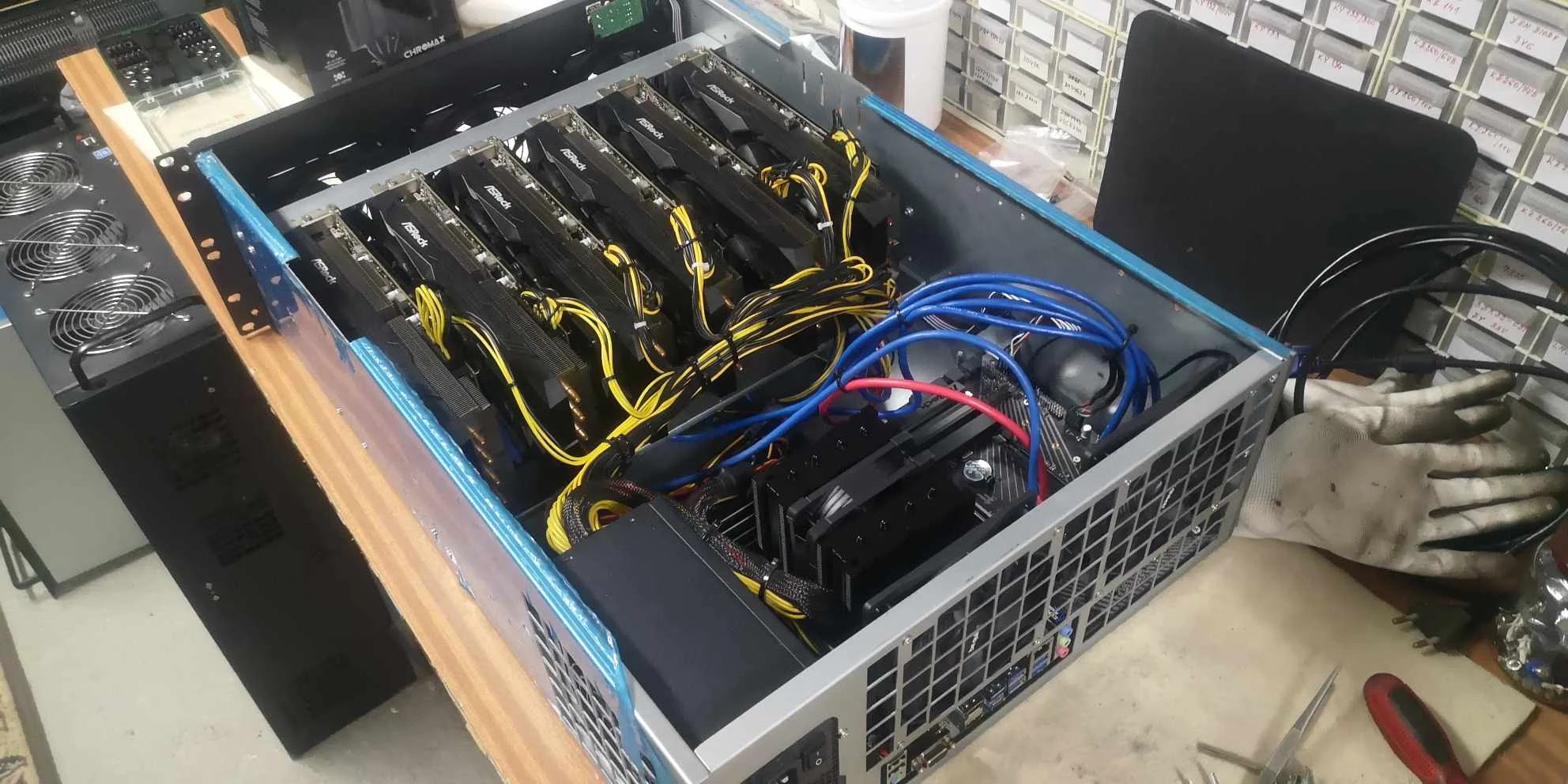
We ported the entire simulation framework from CPU to GPU using NVIDIA CUDA, restructuring algorithms from the ground up for massively parallel execution. Two dedicated high-performance workstations were configured: one equipped with an NVIDIA RTX 4080 GPU and a second running five NVIDIA RTX 3070 GPUs. Simulation kernels were rewritten and optimized for GPU architecture, memory management was redesigned for multi-GPU scaling, and load balancing was implemented across the GPU cluster. Performance was validated on real industrial datasets in partnership with both the industry client and the university research team.
Key Features
- 40× Computational Speedup: Runtime reduced from 14 days to just 6 hours: a transformation that fundamentally changed the engineering workflow.
- Multi-GPU Cluster Architecture: Deployed across two workstations (RTX 4080 + 5× RTX 3070) with load balancing and multi-GPU scaling.
- CUDA Kernel Optimization: Simulation kernels restructured for parallel thermal and flow calculations, maintaining full numerical accuracy.
- Redesigned Memory Management: GPU memory hierarchy optimized to handle large simulation datasets efficiently across multiple devices.
- Industry–Academia Validation: Results jointly validated with industrial and university partners, ensuring scientific rigor and real-world applicability.
- Energy Efficiency Gains: Significant reduction in energy consumption and operational cost per simulation run.
Technologies
- NVIDIA CUDA
- C++
- Python
- RTX 4080
- RTX 3070
- HPC
- Multi-GPU
- Parallel Computing
Results
This project demonstrates that GPU parallelization can redefine the boundaries of engineering simulation. The 40× speedup unlocked rapid experimentation and validation cycles that were previously impossible, giving the client a decisive competitive advantage in drilling simulation and model development.
Work With Us
Ready to Build Something Exceptional?
From Edge AI inference to production firmware, we turn complex embedded challenges into real, deployable solutions. Let's talk.
