AI-Powered Weld Quality Inspection
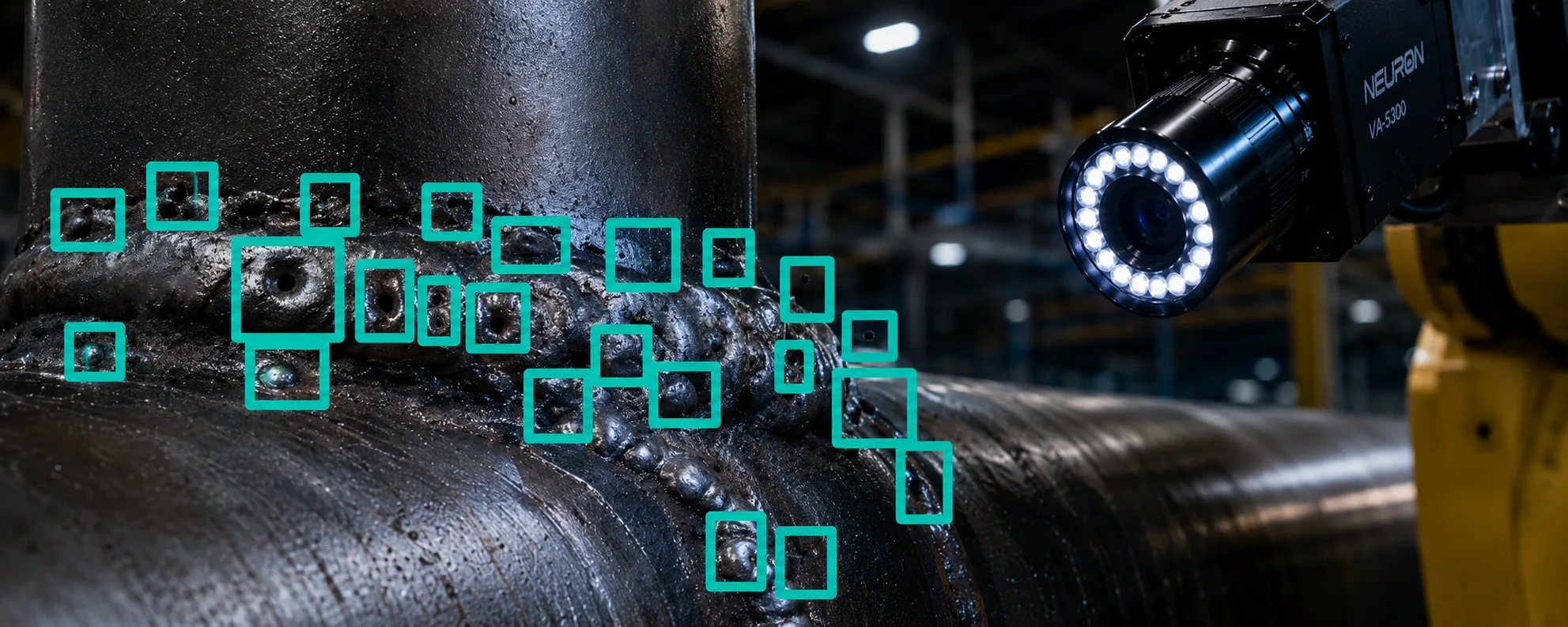
This project presents a one-stage AI-based system for automated weld quality inspection. Using deep learning models (YOLOv8, YOLO11), the system detects and localizes weld defects directly from camera images or video recordings. The system is designed for real-time inspection during welding or post-weld quality control, providing immediate visual feedback and defect localization without the need for manual evaluation. Built on Python and OpenCV, it can process both live camera streams and pre-recorded video footage, making it adaptable to a wide range of industrial inspection scenarios.
Category:
AI / MLIndustry:
Manufacturing / Quality ControlYear:
2025The Challenge
Manual weld inspection is time-consuming, subjective, and prone to human error, especially in high-volume or fast-paced manufacturing environments. Inspectors must evaluate complex surface conditions under varying lighting and viewing angles, making consistent quality assurance difficult to maintain.
Traditional machine vision systems are often rigid and require precise setup conditions to operate reliably. They struggle with the visual complexity of weld surfaces, where acceptable variation and actual defects may appear visually similar under standard imaging conditions.
A robust automated inspection solution must handle real-world variability in weld appearance, lighting conditions, and camera positions, while delivering reliable defect detection fast enough to support production-line workflows.
Our Solution
We developed a one-stage object detection pipeline using YOLOv8 and YOLO11 architectures. The system detects and localizes weld defects directly within the image in a single inference pass, making it well-suited for real-time industrial applications where both speed and accuracy are critical.
The system supports two input modes:
- Live inspection using a connected camera for real-time defect detection during or after welding
- Video-based inspection for reviewing recorded footage and performing post-process quality control
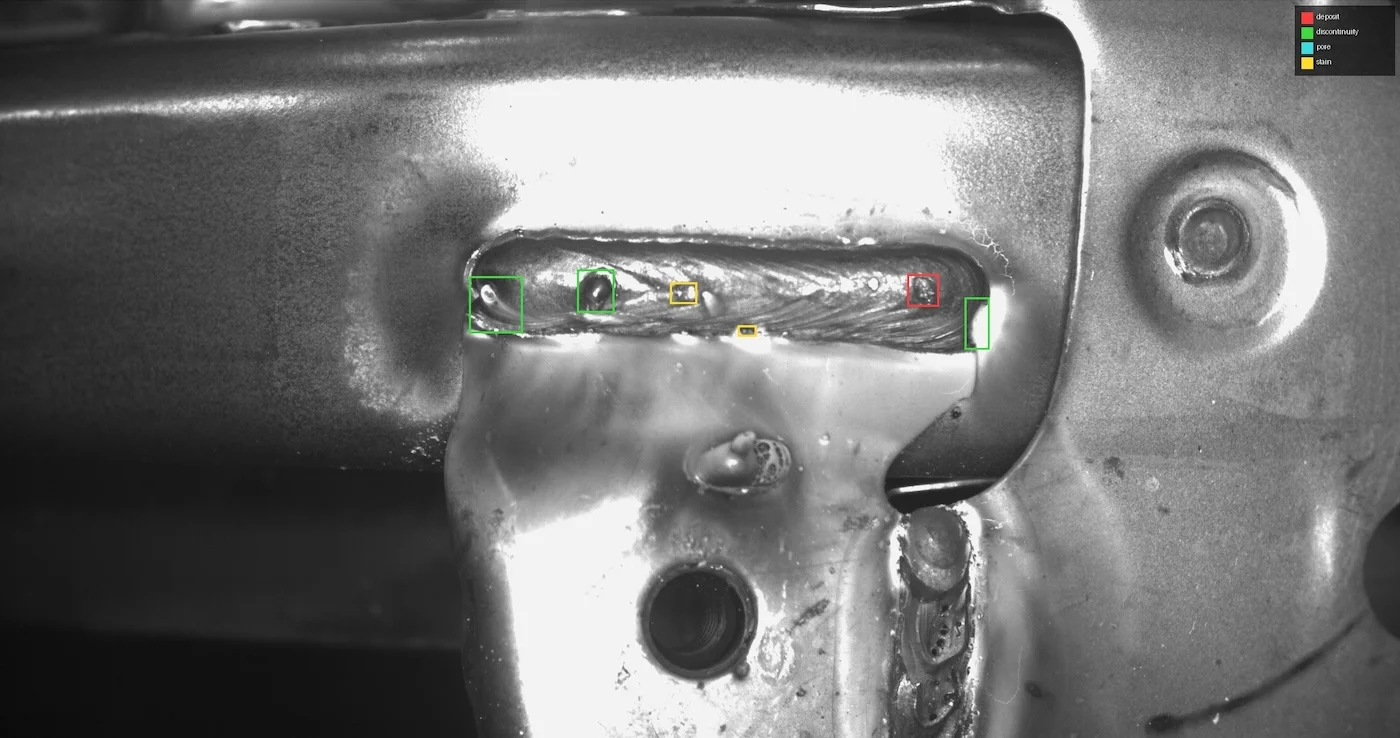
Defect detection is performed using bounding box localization, which marks the position and extent of each identified defect within the image. The system is trained to identify the following categories of weld surface issues:
- Dents
- Discontinuities
- Stains
- Surface irregularities
- Other visible weld defects
Built on Python and OpenCV, the solution integrates easily into existing inspection workflows and can be connected to cameras, displays, or reporting systems already in use in the production environment.
Key Features
- One-Stage Detection Architecture: YOLOv8 and YOLO11 models perform defect detection and localization in a single inference pass, enabling fast and efficient processing suitable for real-time inspection.
- Dual Input Mode Support: The system accepts both live camera feeds for real-time inspection and recorded video files for post-process quality review, providing flexibility across different inspection workflows.
- Visual Defect Localization: Bounding box annotations mark the exact position and extent of each detected defect within the image, providing clear and actionable output for operators or downstream systems.
- Multi-Class Defect Detection: The model is trained to identify multiple weld defect categories, including dents, discontinuities, stains, surface irregularities, and other visible weld issues.
- Python and OpenCV Integration: The solution is built using Python and OpenCV, making it straightforward to integrate with existing industrial camera systems, video recording setups, and production-line software.
- Real-Time Processing Capability: The architecture is optimized to support real-time video processing, enabling inspection results to be delivered without introducing significant delays in the production workflow.
- Adaptable to Industrial Environments: The system can be configured for different camera setups, lighting conditions, and weld types, making it suitable for deployment across varied manufacturing and quality control environments.
Technologies
- Python
- PyTorch
- YOLOv8
- YOLO11
- OpenCV
- Computer Vision
- Deep Learning
- Object Detection
- Visual Quality Inspection
How the Inspection Process Works
- A camera captures images or video of the weld surface during or after the welding process.
- The input is passed to the YOLOv8 or YOLO11 detection model for inference.
- The model identifies and localizes defects within the image in a single forward pass.
- Detected defects are marked with bounding boxes indicating their position and category.
- Results are displayed in real time or saved for review and reporting.
- The output can be connected to alerting systems or used to flag parts for further inspection or rejection.
AI Inspection Use Cases
The same detection pipeline can be applied across a range of weld inspection scenarios. Each deployment is configured to match the specific camera setup, weld type, and production requirements of the environment.
- Post-weld surface quality control: Automated inspection of completed welds to identify surface defects before parts proceed to the next production stage.
- In-process weld monitoring: Real-time inspection during the welding process to detect issues as they occur and enable immediate corrective action.
- Video-based quality review: Inspection of recorded footage from production lines to perform retrospective quality analysis and identify recurring defect patterns.
- Multi-camera inspection setups: The system can be extended to support multiple camera inputs, enabling full-perimeter inspection of complex weld geometries.
- Integration with rejection systems: Detection results can be connected to automated rejection or flagging mechanisms, removing defective parts from the production line without manual intervention.
Results
The system successfully detects and localizes weld surface defects using a one-stage deep learning approach. By combining YOLOv8 and YOLO11 architectures with real-time video processing, the solution delivers reliable inspection results without the delays or inconsistencies associated with manual evaluation.
Supporting both live camera input and pre-recorded video, the system fits into a wide range of production environments and inspection workflows. Defects are localized with bounding boxes, providing clear and interpretable output that can be used directly by operators or connected to automated downstream systems.
The Python and OpenCV foundation makes the solution straightforward to deploy and integrate with existing industrial camera infrastructure. The result is a practical, adaptable weld inspection tool that reduces reliance on manual checking and provides a consistent basis for quality control decisions.
Work With Us
Ready to Build Something Exceptional?
From Edge AI inference to production firmware, we turn complex embedded challenges into real, deployable solutions. Let's talk.
