
Thread Mesh Network for IoT Integration
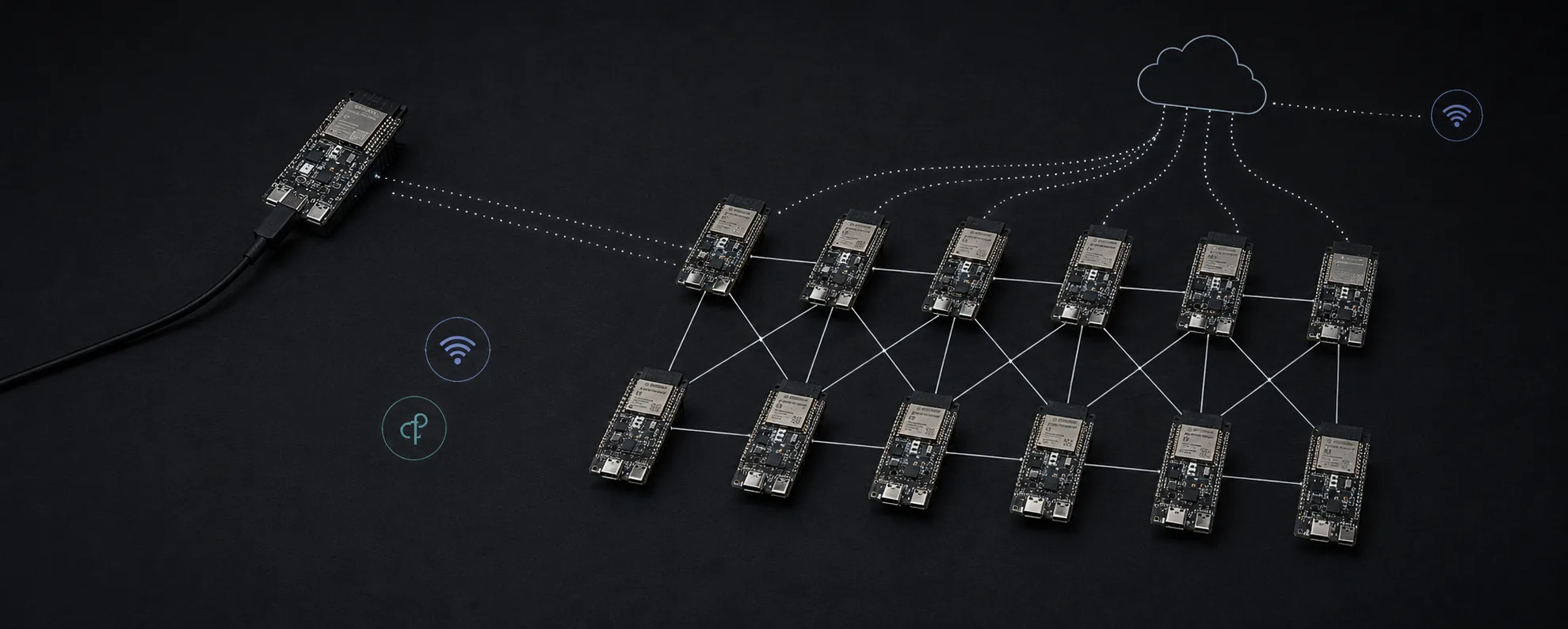
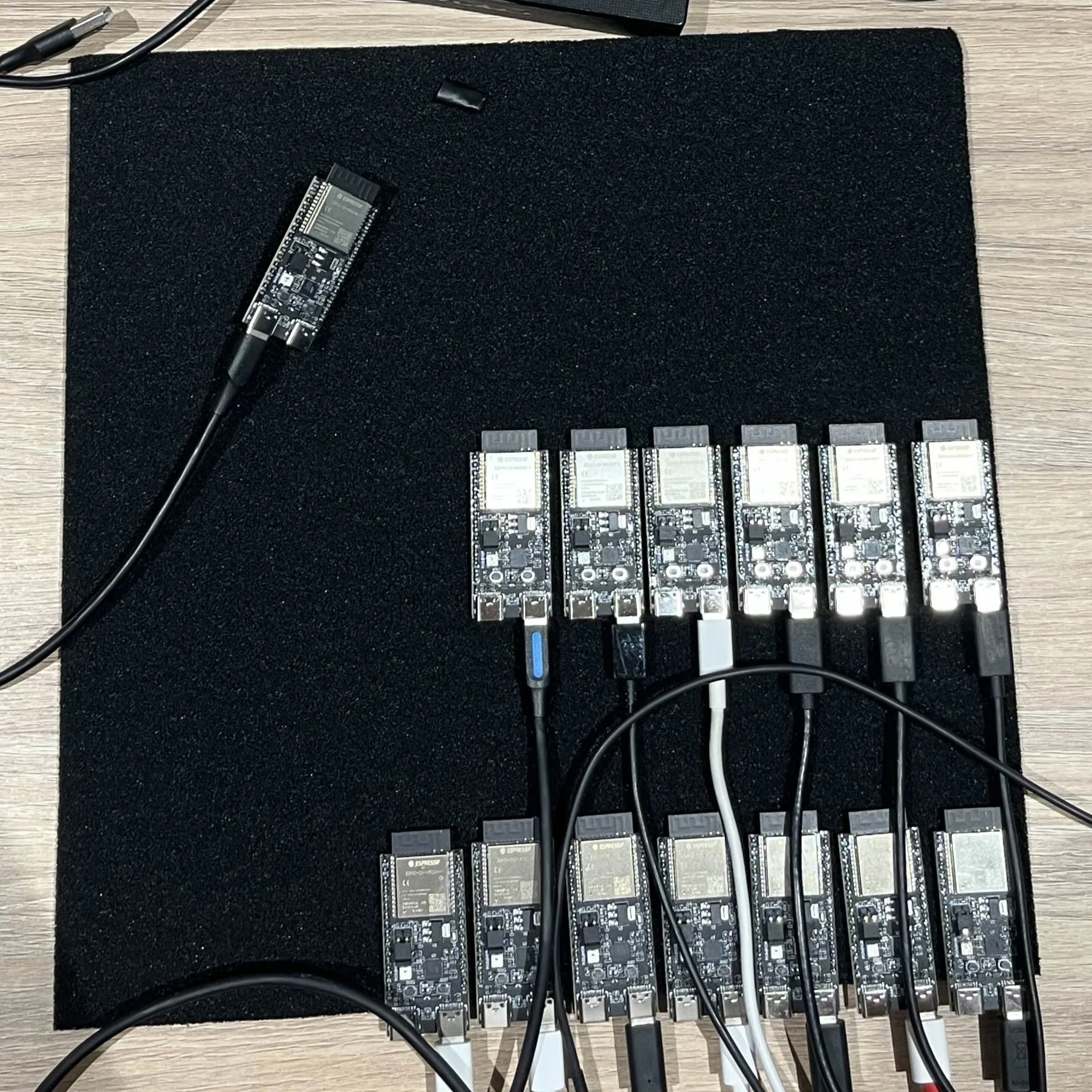
We built a resilient, cloud-connected IoT mesh using multiple ESP32C6 devices running the Thread protocol. A dedicated ESP32C6 border router bridges the low-power Thread mesh to a WiFi network, enabling bidirectional data flow between distributed sensors and cloud services, without sacrificing energy efficiency or scalability.
Category:
IoTIndustry:
IoT / IndustrialYear:
2024The Challenge
Conventional IoT connectivity approaches hit a wall as networks grow: WiFi draws too much power for battery-operated sensor nodes, point-to-point BLE links lack the multi-hop range needed for large deployments, and a single-gateway architecture means one failure brings down the entire network. Adding cloud integration on top of these fragile topologies introduces latency and complexity that makes real-time sensor control impractical. The customer needed a network that could scale to dozens of nodes, survive individual failures, keep sensor power budgets low, and exchange data with cloud services in real time, all within a single unified architecture.
Our Solution
We implemented the Thread protocol using the OpenThread stack on ESP32C6 hardware to create a self-healing, multi-hop mesh. A dedicated ESP32C6 running the Thread Border Router role bridges the mesh to the customer's WiFi infrastructure. On the cloud side, MQTT publishes sensor readings and delivers control commands back into the mesh through the border router. Each mesh node operates in an optimized low-power profile, waking only to transmit or relay data. The system was validated under variable load conditions, adding and removing nodes dynamically, confirming stable mesh reformation, low-latency command delivery, and consistent data throughput to the cloud backend.
Key Features
- Thread mesh networking (OpenThread): Self-healing, multi-hop mesh built on the IEEE 802.15.4 radio layer. Nodes automatically route around failures, maintaining connectivity even when individual devices drop out or power cycle.
- ESP32C6 border router: A designated ESP32C6 runs the Thread Border Router role, translating between the Thread mesh and the customer's WiFi network. This single integration point handles all routing, address translation, and firewall policy without requiring any cloud-side changes.
- Bidirectional cloud integration via MQTT: Sensor data from every mesh node is published to a cloud MQTT broker in real time. Control commands issued from cloud dashboards or automation rules are pushed back through the border router and delivered to the correct device within milliseconds.
- Low-power node profiles: Mesh end-devices operate in Sleepy End Device (SED) mode, entering deep sleep between measurement cycles. This keeps average node current in the microamp range, enabling multi-year battery life from a single AA cell while remaining fully addressable from the cloud.
- Scalable and fault-tolerant architecture: Thread's mesh topology allows the network to grow incrementally: each new node strengthens coverage and routing redundancy. Validated under dynamic membership changes (nodes joining, leaving, and power-cycling) with confirmed mesh self-repair and zero message loss at the cloud layer.
Technologies
- ESP32C6
- Thread
- OpenThread
- IEEE 802.15.4
- Border Router
- WiFi
- MQTT
- ESP-IDF
- C
- IoT Cloud
Results
The delivered system proves that Thread is a production-ready choice for multi-node IoT deployments where power efficiency, fault tolerance, and cloud connectivity must coexist. With stable mesh reformation under dynamic conditions, microamp-range node power budgets, and real-time bidirectional cloud communication, the architecture provides a solid foundation for any application that needs to connect dozens of sensors reliably, whether in smart buildings, industrial floors, or environmental monitoring networks.
Work With Us
Ready to Build Something Exceptional?
From Edge AI inference to production firmware, we turn complex embedded challenges into real, deployable solutions. Let's talk.
